


A conversation has the power to shift perspectives, reveal hidden assumptions, and even change lives. Yet more often than not, our most meaningful dialogues are clouded by bias or solidified in dogmatic thinking. How do we structure exchanges that are open, fair, and genuinely transformative? We have found that reflective dialogue can be guided, not by scripted rules, but by attitudes, structures, and awareness that keep the path clear and open for growth.
The foundation: What makes a dialogue reflective?
Reflective dialogue is more than an exchange of ideas. It is a process of thinking together, questioning beliefs, and opening space for new understanding. In our experience, it means stepping beyond debates or debates and entering a space where the aim is not to "win," but to learn. These conversations are honest, attentive, and trusting. They are cautious with certainty.
We have noticed that reflective dialogue thrives on these three pillars:
- Openness: A willingness to reconsider one's viewpoint
- Self-awareness: Recognizing our own filters and assumptions
- Intentionality: Deliberately choosing reflection over rapid reaction
Without these elements, dialogue often defaults to patterns that reinforce what we already believe.
Recognizing bias and dogma in dialogue
Let us be clear: Bias and dogma are not always loud or rude; sometimes they hide underneath politeness or even careful listening. Bias is a leaning, often unconscious, that shapes what we notice and what we ignore. Dogma, meanwhile, is a more rigid state, certainty without questioning.
We see bias at work when people only hear what supports their viewpoint. Dogma appears when someone refuses to examine cherished beliefs. Both interrupt genuine reflection, often without us even noticing.
Structuring reflective dialogue: Step by step
We have found it helpful to give reflective dialogue a gentle structure. Not to limit freedom, but to provide scaffolding for openness and fairness. Here’s our preferred sequence:
- Start with intention. Each participant is invited to share their reason for being part of the conversation. This anchors everyone in purpose, not position.
- Set ground rules for respect. These may include attentive listening, pausing before responding, and the freedom to ask clarifying questions.
- Surface assumptions. Early in the dialogue, we encourage naming any underlying beliefs or experiences that shape one’s view. This uncovers bias with kindness, not accusation.
- Invite curiosity. We ask open-ended questions, such as “What experience led you to this view?” or “Can you tell me more about this part?” This shapes a climate of discovery.
- Reflect back. It helps to repeat or paraphrase what others have shared before offering a response. This creates space for correction and understanding.
- Pause and check-in. At intervals, it is valuable to pause and ask, “Is everyone feeling heard? Are we drifting towards judgment?”
- End with insights. Before closing, participants can share something new they noticed or an area where their thinking shifted.
Of course, every group adapts, but this order supports genuine reflection while reducing bias and preventing unspoken dogma from guiding the process.

Common pitfalls: What derails reflective dialogue?
Even with structure, old habits can trip us up. We have seen several common pitfalls derail well-meaning conversations:
- Jumping to conclusions: Making judgments before hearing the full story
- Monopolizing the floor: Dominating the conversation instead of sharing space
- “Fixing” instead of listening: Offering quick solutions when what’s needed is understanding
- Withdrawing or withholding: Staying silent rather than offering genuine thoughts or feelings
A reflective dialogue requires active presence. It is not about being passive, but about being patient. When someone feels defensive or begins to shut down, it’s a sign that process needs adjustment, not blame.
Tools and practices to encourage open reflection
Certain practices can help us maintain the right atmosphere. What works best, in our experience, is when these tools are introduced before any sensitive matter arises.
- Use “I” statements: Speak from your own experience, rather than making general claims.
- Commit to humble inquiry: Assume you do not have all the answers, and let your questions show that.
- Paraphrase before responding: Before sharing your point, repeat what the other said. “What I hear you saying is…”
- Allow silence: Sometimes, a pause is needed before the next thought emerges. We let it happen.
- Self-check for certainty: If we start to feel “absolutely sure,” that’s a sign to pause and look for possible bias.
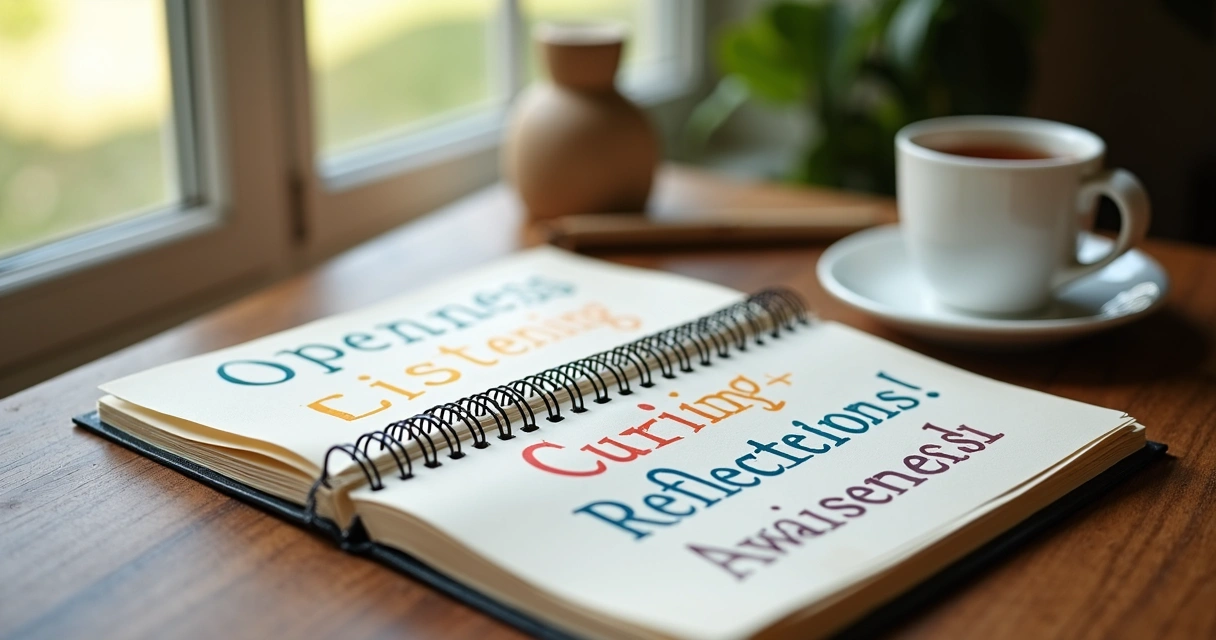
Sometimes, these practices feel a bit artificial at first, but as we develop new habits, they bring ease and depth.
The role of inner awareness in dialogue
Reflective dialogue is not just about words. It depends on our capacity for self-observation, to notice our thoughts and feelings as they arise. We encourage moments of self-reflection before, during, and after each dialogue.
We might ask ourselves:
- What assumptions am I carrying into this conversation?
- Am I listening, or just waiting to speak?
- Is my sense of certainty limiting my curiosity?
Over time, such questions become a quiet companion, guiding us away from bias and dogma before they take hold.
Pausing is sometimes wiser than speaking.
Building trust and accountability
All of this works best when the group values trust. We see trust not as a “nice to have,” but as a necessary condition for people to speak openly and admit when they do not know. This is how honesty grows. Accountability is also key: If someone slips into bias or defensive habits, a gentle reminder can restore balance.
Of course, trust is not guaranteed, it is built through repeated respect and the willingness to remain present even when there is discomfort.
Trust grows when honesty is safe.
Conclusion
Structuring reflective dialogue without bias or dogma is a practice, not a recipe. We have seen it unlock new understanding, deepen relationships, and create a space where it is safe to question, even ourselves. When we hold our beliefs lightly, stay curious, and check our certainties, dialogue becomes a vehicle for growth, not division.
Frequently asked questions
What is reflective dialogue?
Reflective dialogue is a conversation where participants aim to understand themselves and each other through open questioning, honest sharing, and attentive listening. The goal is not to debate or persuade, but to learn, reflect, and expand awareness in a respectful and open manner.
How to avoid bias in dialogue?
To avoid bias in dialogue, we suggest intentionally surfacing assumptions, inviting feedback, and using practices such as paraphrasing and asking open-ended questions. Checking in with oneself for feelings of certainty can help reveal hidden biases before they color the conversation.
How is dogma different from bias?
Bias is an unconscious preference that influences our perception, while dogma is a fixed and unquestioned belief that resists change. Bias often appears subtly, while dogma is more rigid and explicit in conversation.
What are tips for fair reflection?
Tips for fair reflection include starting with curiosity, pausing before responding, using “I” statements, encouraging all voices, and reflecting on what you have learned. Being willing to admit uncertainty and inviting correction makes dialogue more fair and open.
Can anyone practice unbiased reflective dialogue?
Yes, anyone can practice unbiased reflective dialogue if they are willing to be self-aware, open, and intentional. With practice and the proper structure, reflective dialogue becomes easier and more natural over time for any group or individual.