

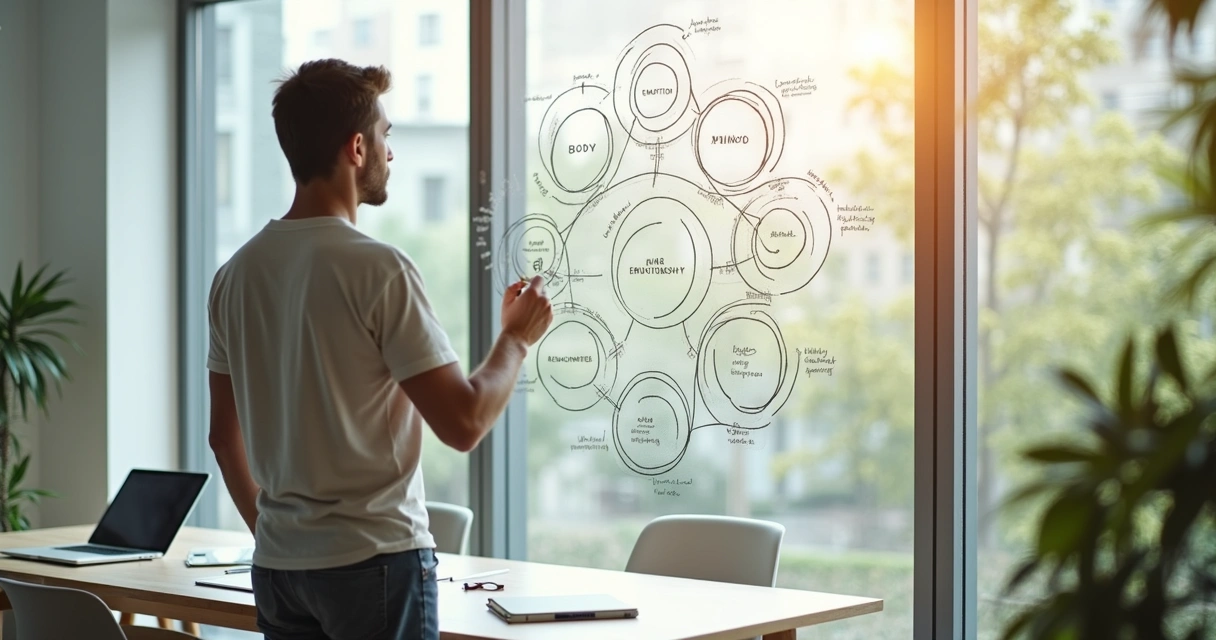
Our understanding of well-being has grown more sophisticated as we realize that no part of our lives exists in isolation. In the search for sustainable happiness and balance, we have found that systems thinking opens new pathways. This is not simply a mental tool but a framework for everyday living—a framework where every choice, feeling, and relationship plays a role in a living, breathing network.
Well-being is not an isolated state. It is the result of connections.
In this article, we want to share how systems thinking brings a new perspective to well-being and, more specifically, what practical exercises can help you in 2026. We will look at the principles, use real-life examples, and show activities that can be adopted now for tangible results.
What is systems thinking in well-being?
Systems thinking sees well-being as a dynamic interplay of mind, body, environment, and purpose. A person’s happiness is not a static target. Instead, it is shaped by patterns, feedback, and relationships among multiple factors, both inside and outside themselves.
In systems thinking, we consider the connections between work, family, social interactions, internal beliefs, habits, and long-term meaning, all as part of one system. These elements influence each other in expected and unexpected ways.
Instead of treating problems one by one, we look for the patterns behind them. For example, stress may not be only about workload. It might also be about a lack of meaningful relationships, perfectionistic beliefs, diet, or even external circumstances you cannot control. The more we map these connections, the clearer the picture becomes.
Why systems thinking matters in 2026
We live in a connected world. Technology, information, and social changes move at high speed. As our environment becomes more networked and uncertain, traditional self-help methods often address symptoms but overlook underlying patterns. We notice that people with good habits sometimes still feel unbalanced—not because the habits are wrong, but because they are disconnected from the rest of their lives.
In our experience, adopting systems thinking leads to deeper and longer-lasting improvements by addressing root connections rather than isolated tips or routines.
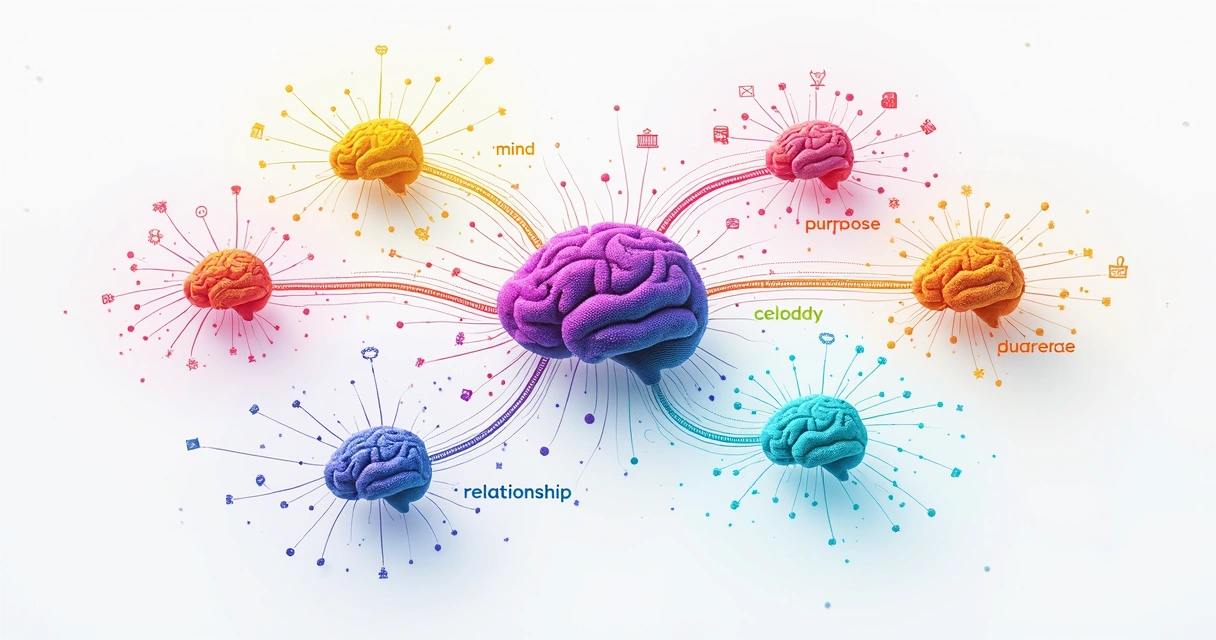
Core principles of systems thinking for well-being
We base our approach on several core principles:
- Interconnectedness: Every aspect of your life—emotional, physical, mental, social—is linked. Small changes in one part can impact the rest.
- Feedback loops: Actions often create responses that feed back into the system, strengthening or weakening certain outcomes.
- Nonlinearity: Change is rarely a straight line. Small shifts sometimes create big, unexpected results.
- Emergence: The whole becomes something more than its parts. Well-being is created by patterns, not just individual habits.
- Context awareness: What works for one person, or in one situation, may look very different in another context.
By applying these principles, we invite a more complete and compassionate view of growth—one that adapts as life does.
Practical exercises for systems thinking in 2026
The goal is to make systems thinking less abstract and more practical for daily life. Here are exercises we believe will make a real difference:
1. Mapping your well-being system
Start by drawing a map of the main components in your life:
- Your daily routines (nutrition, sleep, exercise)
- Your relationships (family, friends, colleagues)
- Your internal world (thoughts, feelings, beliefs)
- Your environment (home, work, community)
- Your sense of meaning or purpose
Place each component on a large sheet, then draw lines between those that influence each other. Be honest. For example, how does your work affect your mood at home? How does your diet influence your thinking?
The act of mapping sharpens self-awareness and often reveals hidden patterns.
2. Identifying feedback loops
Choose a pattern that repeats in your life—such as a recurring feeling of stress or satisfaction. Write down:
- What triggers it?
- What keeps it going?
- How does your reaction affect the system around you?
For example, does feeling tired in the evening lead to skipping exercise, which then leads to poorer sleep? If so, that’s a feedback loop you can work on.
3. Testing leverage points
In systems thinking, a “leverage point” is a small change that can create a bigger effect. Pick just one area from your map that feels manageable, and focus on adjusting it for one week. It could be as simple as:
- Adding 10 minutes of nature time daily
- Switching your phone off during meals
- Saying one kind word to a family member each morning
Watch how this change ripples through your well-being system. Often, modifying one connection shifts others in positive, sometimes surprising ways.
4. Practicing “loop review” journaling
Each evening for a week, write:
- One thing you did for your well-being
- How it affected your mood, energy, or interactions
- Whether there were any unintended effects—positive or negative
This daily review helps build the habit of seeing yourself as part of living networks, not just a list of to-dos.

5. Using questioning as a daily tool
Systems thinkers ask powerful questions. Try these daily:
- What am I assuming about this problem?
- Who or what else is involved?
- Where are the unexpected connections?
- Is there a pattern I keep repeating?
With regular questioning, patterns become visible and solutions become clearer.
The path forward: Integrating systems thinking every day
Systems thinking becomes a way of living rather than a technique you use once. As we practice, the following shifts often happen:
- We stop blaming a single problem or person—we seek patterns, not culprits.
- We become more adaptive, responding gently to change instead of resisting it.
- We find opportunities for growth where once we saw limitations.
Applying these exercises regularly makes the system visible. We identify strengths. We spot obstacles. And we see our unique potential for growth, even in tough times.
Small changes shape bigger outcomes.
Conclusion
Our experience tells us that well-being is not a solitary climb, but a web of interactions and influences. When we choose to see with a systems perspective, we find not just quick fixes, but lasting movement towards a more whole and satisfying life. Practical systems thinking exercises can be woven into our routines right now. The rewards are not only personal, but ripple outward into our families, communities, and beyond.
As 2026 approaches, the future of well-being is clear: it is connected, conscious, and designed with systems in mind.
Frequently asked questions
What is systems thinking in well-being?
Systems thinking in well-being means seeing our happiness, health, and fulfillment as products of interrelated factors in our lives, not as isolated achievements. It looks at how habits, relationships, environment, and meaning come together to create our sense of well-being, focusing on patterns and connections rather than single causes.
How can I start systems thinking exercises?
Begin by mapping out the main elements of your life, such as routines, relationships, beliefs, environment, and purpose, and look for the connections between them. Daily journaling, identifying repeating patterns, and asking reflective questions all help to build systems thinking habits over time.
Is systems thinking worth it for well-being?
Yes, we have found that systems thinking often leads to deeper, more sustainable well-being because it helps you address not just symptoms but their root causes in your life system. It allows for real, long-term growth rather than temporary relief.
What are the best practical exercises?
Some of the most effective exercises include mapping your well-being system, identifying feedback loops, testing simple leverage points, keeping a loop review journal, and making questioning a daily practice. These tools make connections visible and lead to meaningful changes.
How does systems thinking improve mental health?
Systems thinking helps mental health by showing how diverse life elements interact to influence our emotional states. By seeing patterns and feedback loops, it becomes easier to make changes that have a broader, more lasting impact, supporting resilience and adaptability.