


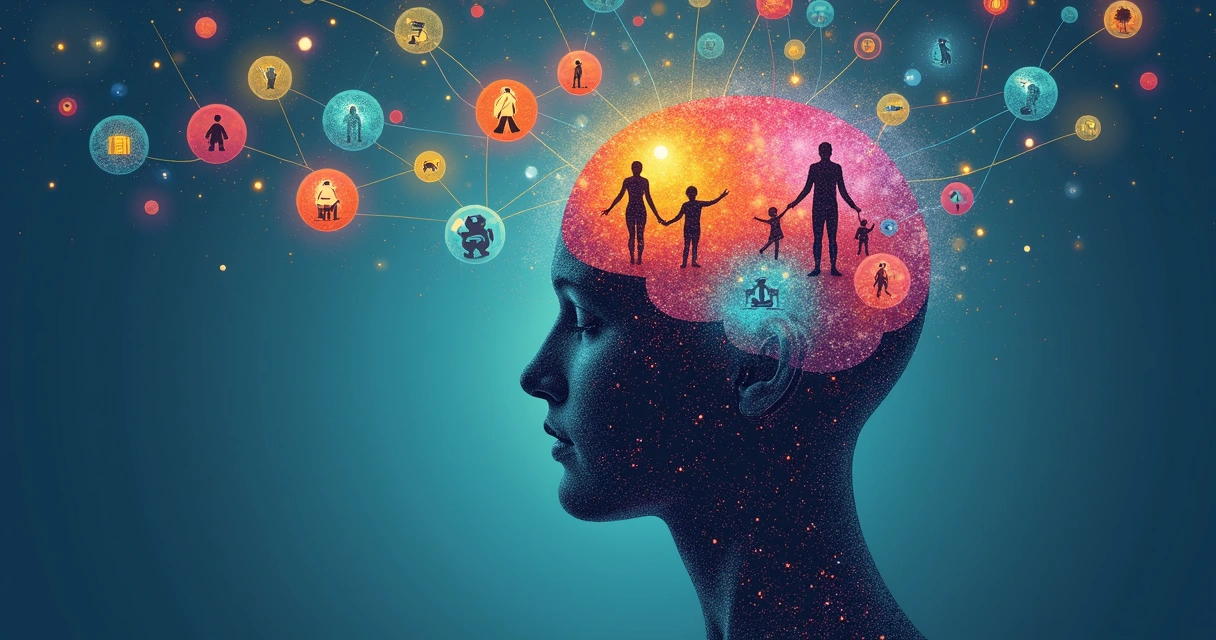
Each day, we make thousands of decisions—some as quick as picking up a cup, others with far-reaching impact. Beneath these actions, a rich web of mental representations is quietly at work, shaping what we notice, value, or ignore. We often move through life unaware of how these internal models influence us.
Our minds do not mirror reality. They create it.
In our experience, understanding the nature of mental representations and how concepts live within them helps us see why we act as we do. It also opens paths to intentional change in decision-making. Let’s begin with the core idea: what is a mental representation, and why should we care?
How we form internal maps of reality
At its heart, a mental representation is an internal image, idea, or framework that stands for something in the world or in our own experience. These representations can be visual, verbal, emotional, or even sensory. For example, when we think of “tree,” we might picture green leaves, imagine the scent of wood, or feel a sense of calm in nature. All of this forms the concept of “tree” inside us.
Concepts are units within these mental maps. While “apple” brings one set of qualities and memories to mind, “justice” offers something very different—perhaps more abstract, rooted in emotions and social beliefs. Our minds store not just facts, but meaning. And that meaning changes how we see the world and how we act.
Why concepts matter for daily choice
Mental representations influence our decisions by filtering perception, guiding memory, and shaping what seems right or possible. Imagine meeting someone new at work. You bring mental concepts of “trustworthy,” “professional,” or “introvert” with you. These guide your first impressions and your next actions. If your concept of “leadership” is strict and hierarchical, you relate to authority differently than someone whose mental image of leadership is collaborative.
In many moments, these internal concepts work beneath awareness. We do not have to consciously recall the rules of traffic lights to stop at red. We just do. That’s possible because the concept of “red means stop” is a stable, accessible representation—ready whenever needed.
Yet some decisions are less automatic. Imagine you’re trying to decide whether to save or spend money. Your concept of “future security,” “pleasure,” or even “what people like me do with money” steps in. These concepts are made from memories, upbringing, stories, and even past choices. They guide whether you reach for your wallet or hold back.
How concepts are shaped over time
We grow our mental representations through direct experience, education, and social interaction. As children, we start with simple ways of sorting the world: good or bad, safe or risky. Over time, we learn more complex concepts. A child might think “doctor” means “someone who helps.” Later, exposure to diverse ideas might expand this concept—perhaps seeing that a doctor can help, but also deliver difficult news or work for change.
Lists help clarify the ways we build concepts:
- Personal experience: Encounters leave memory traces, shaping concepts.
- Language: Words carry meaning; stories and conversations update internal maps.
- Cultural context: What groups value or expect sets a frame for our concepts.
- Observation: Watching others make choices or solve problems refines ideas.
These factors blend together. Only rarely do we stop to separate them out. That’s why questioning how our concepts arose is not always automatic, but it can be deeply revealing.
How concepts guide and limit vision
The power of concepts is not just in what they allow us to see, but in what they make it hard to see. If our concept of “success” equates to money and status, we may overlook forms of success involving community or learning. In recent years, we’ve noticed more people pausing to ask, “What does happiness really mean to me?” Such questions show the force of mental concepts on our everyday perceptions and goals.
Research suggests that modifying mental representations—by exposure, practice, or reflection—can open our view. Imagine you grew up with the idea that “asking for help is weakness.” Later, you learn that many strong leaders ask for help often. With this new input, your concept of strength shifts. Now, asking for help feels possible, even wise.
Mental rigidity often arises when our concepts become fixed and self-defensive. When that happens, new information is ignored or dismissed. On the other hand, flexible mental representations allow us to adjust as situations demand.
Concepts in action: Everyday examples
Let’s look at a few situations and how concepts operate:
- Food choices: The concept of “healthy” drives what we pick at the store, even when hunger says otherwise.
- Conflict: If we see disagreement as a threat, we may avoid hard conversations. If our concept is “conflict as growth,” we talk more openly and gain insight.
- Time management: The concept of “wasted time” can generate guilt, but seeing “rest” as valuable can bring calm instead.

In our research, we have seen how people make lasting changes not just by learning new facts, but by reshaping the concepts that guide them. When someone shifts their view of failure from “proof I am not good enough” to “a step in growth,” their actions and mood show genuine change.
How can we make better decisions by updating concepts?
To make new decisions, we need new concepts. But how do we find or create them? We suggest a process that nearly anyone can use:
- Pause and notice a decision about to be made.
- Ask: What idea or belief is guiding this choice?
- Trace where that concept might have come from.
- Seek an alternative or wider view—for example, by learning how someone else approaches the situation.
- Try a new concept, even in small ways, and notice the outcome.
Doing this, we step outside one frame and see other options. Sometimes the new view feels uncomfortable—shaking a long-standing belief is not always easy. With practice, though, these mental models become more flexible. Choices start to look different. We shape our representations; in doing so, we shape ourselves.
Living with awareness of our concepts
If we want to make decisions with greater clarity or intention, we need to look inside as much as outside. Our habits, emotions, and values are all rooted in mental concepts. Awareness is the starting point. We may never control all that goes on in our minds, but we can shine light on the maps we use. In doing so, we lead lives that feel more chosen and less automatic.
Conclusion
Our daily decisions are guided, shaped, and sometimes limited by the concepts we carry—a collection of models built over time from countless moments. By bringing awareness to these representations, questioning their roots, and being open to change, we create space for growth and freedom in thought and action. Our internal concepts can be updated. When we do so, our choices begin to reflect who we are, and who we wish to become.
Frequently asked questions
What are mental representations in psychology?
Mental representations are the internal models, images, ideas, or frameworks that our minds use to stand for aspects of reality, thoughts, feelings, people, and events. In psychology, these internal models help us interpret incoming information, remember the past, and plan for the future.
How do concepts affect daily decisions?
Concepts act as mental shortcuts, filtering what we notice and guiding our choices—sometimes in ways we are not aware of. They shape how we define options, how we respond to challenges, and what we see as meaningful or possible.
Can mental representations change over time?
Mental representations can and do change throughout our lives as we have new experiences, learn more, and reflect on past events. Flexible mental maps make us more open, resilient, and responsive to change.
Why are mental representations important?
Mental representations are important because they shape the way we act, feel, remember, and understand the world. They can help or limit us, depending on how accurate or flexible they are, affecting everything from daily habits to major life decisions.
How can I improve my mental representations?
To improve your mental representations, practice reflection on your beliefs and ideas, seek new perspectives, learn from diverse experiences, and question automatic thoughts when making decisions. Over time, these steps can lead to greater self-understanding and wiser choices.