
Language shapes thought. When we want to understand ourselves and others with rigor, we need words that capture the depth and complexity of human experience. That is why we have dedicated ourselves to creating a practical glossary for 2026, rooted in the Marquesian approach—a glossary not of isolated terms, but of living concepts designed to help make sense of our inner worlds and shared realities.
Why do we need a new glossary?
Most common languages fall short when faced with the subtle processes of consciousness, emotion, intention, and behavior. We have all found ourselves searching for words when describing an internal conflict, or when discussing the evolution of personal purpose. Familiar vocabulary can feel limiting or ambiguous—especially when it comes to new models and frameworks that transcend old categories.
In our experience, a dedicated glossary offers not only precision, but also new possibilities for dialogue and personal growth. It is an invitation to deeper self-reflection and clearer communication. As systems of meaning shift and expand, the way we speak about them must also mature.
Core principles of Marquesian language
The architecture of the glossary is not random. It nurtures a specific attitude: one of curiosity, critical thinking, and respect for complexity. The Marquesian language is structured to promote the following principles:
- Clarity: Words must have clear boundaries and purposeful definitions.
- Coherence: Concepts relate to each other in logical, meaningful ways.
- Integration: Vocabulary respects the overlapping fields of science, psychology, philosophy, and lived experience.
- Ethics: Terms recognize the importance of responsibility in thought and action.
- Practicality: Glossary is meant to support dialogue, training, and application—not just academic debate.
These guiding ideas inform both the content and the use of the glossary, helping us avoid traps of jargon or imprecision.
Key terms for 2026: Building blocks of meaning
The process of updating and organizing terminology is continuous. We review the glossary as models evolve and as practical needs arise. For 2026, certain terms stand out as fundamental for anyone wishing to build a shared language about consciousness and growth.
Foundational concepts
Foundational terms shape our understanding of the big picture. Here are some examples:
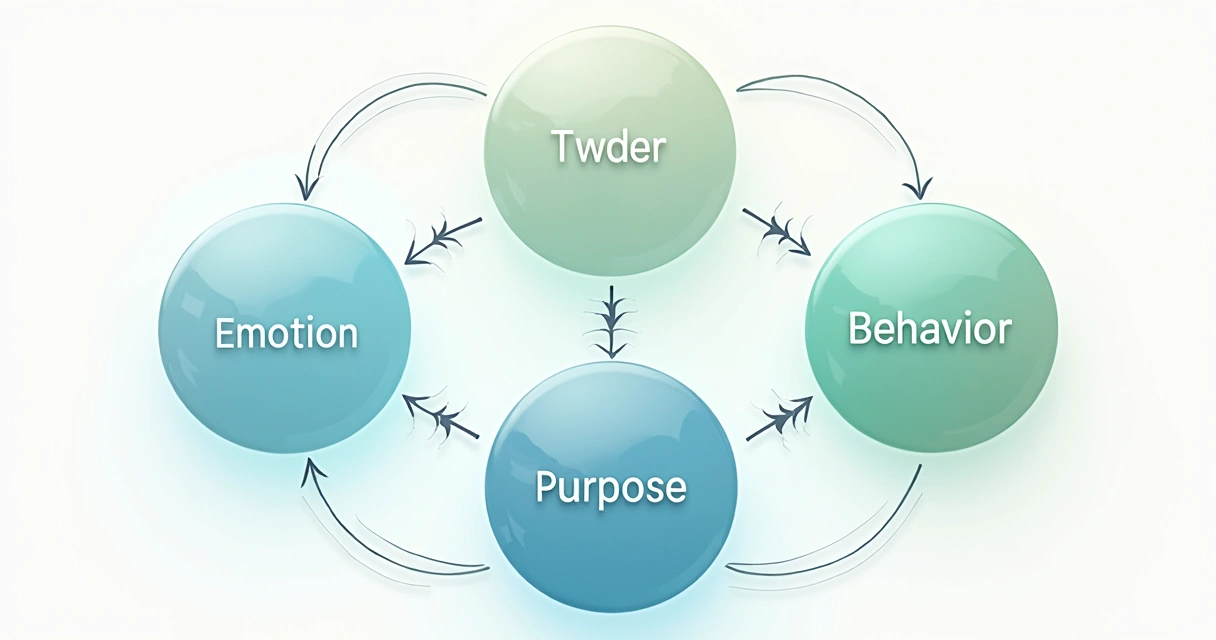
- Consciousness: The dynamic field in which awareness, perception, and intention arise and interact. In Marquesian terms, this is not simply “being awake,” but describes an active relationship with experience and self-reflection.
- Emotion: The body’s way of expressing shifts in meaning, values, and connection. Emotion is seen as both information and impetus—a catalyst for action or change, not just background noise.
- Purpose: The organizing direction or meaning that orients personal and collective action. Purpose is not static; it develops as consciousness matures.
- Behavior: The visible expression of internal states, choices, and intentions. Behavior is analyzed not only as output, but as feedback that cycles back into consciousness.
Integrative terms: Linking the parts
A mature glossary includes concepts that cross boundaries. Integration is central:
- Systemic Self: The understanding of the self as a network of relationships, influences, and contexts, rather than as an isolated entity. This view invites questions about identity, responsibility, and influence.
- Developmental Matrix: The set of stages, potentials, and crises that shape growth over time. It offers a map, but never prescribes one path for everyone.
- Maturity of Consciousness: The measure of how one integrates feeling, thought, and action with ethical awareness. Maturity is not about age, but about the quality of integration.
Applied terms: Words in motion
A living glossary must support practical application, not just theoretical debate. Certain terms speak to this:
- Reflective Practice: A method of inquiry where action and self-observation feed each other. This term emphasizes learning while doing, not only after the fact.
- Alignment: The ongoing process of tuning behavior and values to emerging purpose. Alignment is understood as both a goal and a practice, never fully finished.
- Compassionate Inquiry: Approaching self and others with both curiosity and care, seeking patterns beneath behavior without rushing to judge or fix.
How to use a glossary for development
Words are powerful tools when used well. In our work, we have found that mastery of the glossary can shape not only how we talk, but how we act and grow.
- Study key terms regularly. Understanding the glossary is not a one-time task, but a recurring discipline. Each time we revisit the definition of “purpose,” we can discover a new layer.
- Apply terms in journal writing or dialogue. Replace vague words with more precise ones, and see how this shifts the entire conversation.
- Challenge yourself to use at least one new term each week. Notice how it changes your thinking—and your actions.
A practical glossary should live and breathe alongside you, deepening your understanding as you change and grow.

The evolution of language in human development
The act of building a glossary is more than “collecting words.” It is a living process, echoing the changes in consciousness and society. Whenever the glossary is updated, we are reminded of the story that language tells—a story of striving for clearer, wiser, and more genuine mutual understanding.
We know that many people find a sense of relief in finally having words for what they have long felt. Suddenly, old confusions become new possibilities. This is the gift of a dedicated language: it opens doors, and it helps us walk through them together.
Shared language is shared possibility.
As we look to 2026, we see the glossary as a compass—a way to orient ourselves toward deeper connection and purposeful growth.
Conclusion
We believe that a living glossary can help bring clarity, focus, and care to how we relate to ourselves, to each other, and to our shared future. With the continuous evolution of concepts, keeping vocabulary up to date is not only wise, but necessary for honest communication and growth. As we carry this glossary forward, we hope it serves as a bridge—connecting abstract concepts to practical actions, and linking individuals in shared understanding.
Frequently asked questions
What is the Marquesian language?
The Marquesian language is a system of terms and concepts created to describe human consciousness, emotion, purpose, and behavior with accuracy and integrity. It is designed to clarify communication and support human development, integrating scientific, philosophical, and practical perspectives.
How to use the Marquesian glossary?
The glossary is a reference to support dialogue, study, and reflection. We recommend starting with foundational terms, using them in journaling or discussion, and gradually introducing new words when discussing experiences or practicing methods. Applying these terms builds clarity and enhances insight into personal and collective processes.
Where can I find the glossary?
The glossary is updated as part of our ongoing educational and practical tools. We make it available through our learning resources, educational programs, and within community dialogues. The glossary is regularly reviewed and expanded to match the needs of conscious growth and development.
Why build a new glossary for 2026?
As understanding of consciousness and behavior advances, older vocabulary often becomes outdated or insufficient. A new glossary for 2026 ensures that we keep pace with emerging insights. This new set of terms reflects the changing landscape of human development, supporting clarity and coherence in modern challenges.
Is it worth learning Marquesian now?
Yes, beginning to learn Marquesian language and its glossary now gives a head start in understanding upcoming ideas and engaging in deeper self-inquiry. Early familiarity with the vocabulary allows for smoother participation in learning communities and develops better communication on complex topics.