


We all know the feeling. We set an intention—to eat healthier, to listen more, to be present with family—yet a week later, we find ourselves reaching for snacks, interrupting friends, or mindlessly scrolling. The distance between what we wish to do and what we actually do is a lived experience many share, and it often leaves us questioning our own willpower or sincerity.
This gap between behavior patterns and conscious intentions is not a sign of weakness or hypocrisy. In our work, we see it as a complex interplay between automatic routines and the deeper currents of our conscious mind. Why do these mismatches appear so often, and what can we do about it?
The structure of behavior patterns
Let’s start by understanding what a behavior pattern truly is. In our research, we see behavior patterns as sequences of action, thought, and feeling that tend to repeat over time. These patterns do not come out of nowhere. They are usually shaped by:
- Past experiences and learning
- Family and cultural conditioning
- Emotional responses to past situations
- The environment or context in which we act
For example, someone who grew up being rewarded with food might connect comfort with eating, long before they decide that they want to change their diet. Our minds register these experiences automatically, and our bodies often remember faster than our conscious minds can react.
Patterns can feel like invisible scripts running in the background.
These scripts are not inherently good or bad—they are simply efficient. They help us drive, speak, and move through daily life without constant conscious effort. But when life demands change, these same patterns become obstacles.
Conscious intention: What does it really mean?
Setting an intention is an act of consciousness. We pause, reflect, and declare a desire for change. Intention involves:
- Awareness of our current state
- A vision or value guiding our desired future
- The decision to move toward something new
This is a creative moment. When we set an intention, we are in touch with our values and ideals. There is clarity, hope, and even a sense of commitment. But as many of us have learned, intention alone is not always enough.
Conscious intention is a deliberate, self-reflective choice to shape our future actions.
The question is: why do these powerful intentions so often clash with the hard-wired routines of behavior patterns?
Why do behavior and intention often mismatch?
We notice three common sources of mismatch in our experience working with human development:
- Automaticity takes over: When under stress or confronted with sudden cues, our automatic responses often outrun our slow, reflective mind. Habit wins.
- Emotional anchors: Behaviors are glued to emotions. Even when we “know better,” strong feelings can bring us back to old ways.
- Contradictory beliefs: Sometimes, we hold several beliefs at once, some explicit and some hidden. A conscious intention may conflict with an unconscious belief formed years ago.
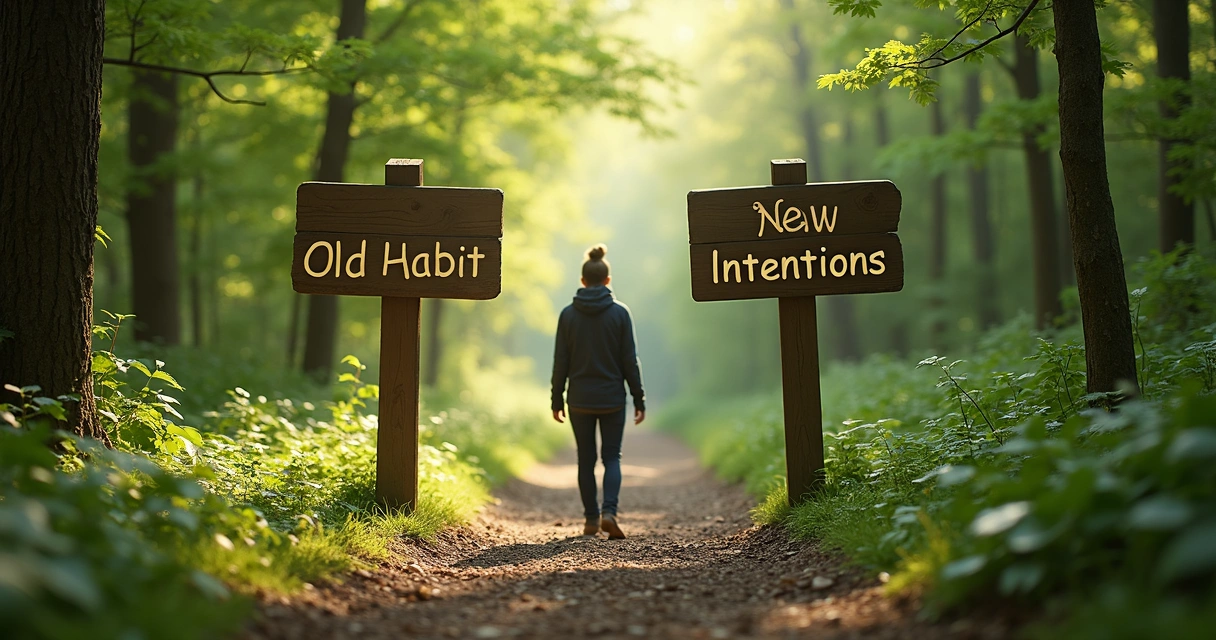
Most of us have felt the sudden urge to act in a way that goes against our intention—sometimes with full awareness and sometimes not. The force of habit is real, and the roots of emotional memory run deep.
Seeing the mismatch in our daily life
Mismatches appear everywhere, from small routines to life-altering decisions. We have noticed these common situations:
- Wanting to listen attentively but consistently checking the phone during conversations
- Planning to stay patient with children but snapping at the first sign of chaos
- Intending to exercise after work but settling on the couch instead
- Committing to honesty but defaulting to minor excuses or “white lies” when feeling exposed
Behavior–intention mismatches do not mean that someone is insincere: they reflect the layered complexity of human development.
When we see people around us behave inconsistently, it is easy to judge. But observing ourselves makes us recognize how deep and stubborn these patterns can be, regardless of sincere intentions.
Why does the mind create these gaps?
Our mind and behavior are not separate. Yet, there are different currents within us that flow at different speeds and depths. We often call this “the conflict of the 3 selfs”: the acting self (what we do), the thinking self (what we believe), and the conscious self (what we plan or intend).
These selfs can pull us in different directions:
- The acting self responds to impulses, old experiences, and bodily routines.
- The thinking self tries to interpret or justify behavior, often after the fact.
- The conscious self sets higher aims, ideals, or intentions.
Alignment among these parts brings inner harmony, but most of us experience gaps that need bridging.
In our experience, the acting self is often quicker than the conscious self. The body reacts before the mind stops to reflect. It’s only later—sometimes minutes, sometimes years—that we realize the mismatch and wonder how it happened.
The role of environment and social influence
Often, we forget that behavior patterns are supported and triggered by our environment. This includes physical surroundings, relationships, social cues, and the expectations placed upon us. A person who sets an intention to be calm may find it almost impossible in a workplace that rewards aggression or in a home where conflict is constant.
We have seen how:
- Certain locations can spark old routines (for example, eating in front of the TV)
- Relationships can reinforce positive or negative habits
- Hidden social rules can push us to conform, even if it goes against our deepest values

What can we do about it?
We think the first step is to accept that mismatches are natural and widespread. Judging ourselves harshly for gaps between intention and behavior rarely helps; gentle curiosity does. When we approach our patterns with curiosity, several strategies become available:
- Pause and notice automatic behaviors when they happen, without trying to change them immediately
- Reflect on what emotions or beliefs may be fueling the pattern
- Experiment with changing parts of the environment that cue old habits
- Share intentions with supportive people who can encourage alignment
- Practice patience—real change often starts with understanding, not force
When we recognize the system of habit, emotion, and intention, and bring a bit more light into the shadowy spaces, the process of alignment becomes possible. It is a slow and sometimes frustrating journey, but one where each step forward brings greater self-knowledge.
Conclusion
In our view, mismatches between behavior patterns and conscious intentions are not personal failings but natural outcomes of a dynamic, multi-layered human mind. Self-understanding grows when we become aware of the forces shaping our actions and learn to bridge the space between who we are now and who we wish to become.
Every moment of awareness brings us a little closer to alignment.
Frequently asked questions
What are behavior patterns and intentions?
Behavior patterns are automatic sequences of actions, thoughts, and emotions that repeat over time, while intentions are deliberate, conscious decisions to act in a certain way or achieve a specific goal. Behavior patterns develop through repetition and are often influenced by past experiences, environment, and learned responses. Intentions, in contrast, arise from conscious thought and reflect our values and goals.
Why do patterns and intentions mismatch?
Mismatches occur because behavior patterns are rooted in habit, emotion, and context, while intentions depend on conscious reflection. Under stress or strong emotion, automatic patterns often override conscious plans. Deeply held unconscious beliefs and cues from the environment can also cause behavior to diverge from intention.
How can I align behavior with intentions?
Alignment starts with self-awareness and gentle observation of your own automatic reactions. You can support alignment by pausing before acting, reflecting on emotional triggers, adjusting your environment, and seeking support from others who encourage your intentions. Practicing patience and viewing behavior with curiosity, rather than judgment, helps the process.
What are common mismatches examples?
Common examples include deciding to eat healthier but reverting to old eating habits when stressed, wanting to be more patient but reacting irritably in challenging moments, or planning to listen more attentively but getting distracted by electronic devices during conversations. These mismatches reflect the ongoing challenge of bringing intention into daily action.
Can behavior patterns be changed easily?
Changing behavior patterns usually requires time, attention, and repeated effort. Habits built over years do not shift quickly, but with consistent practice, reflection, and adjustments to environment and support systems, new patterns can develop and gradually replace old ones.